


|
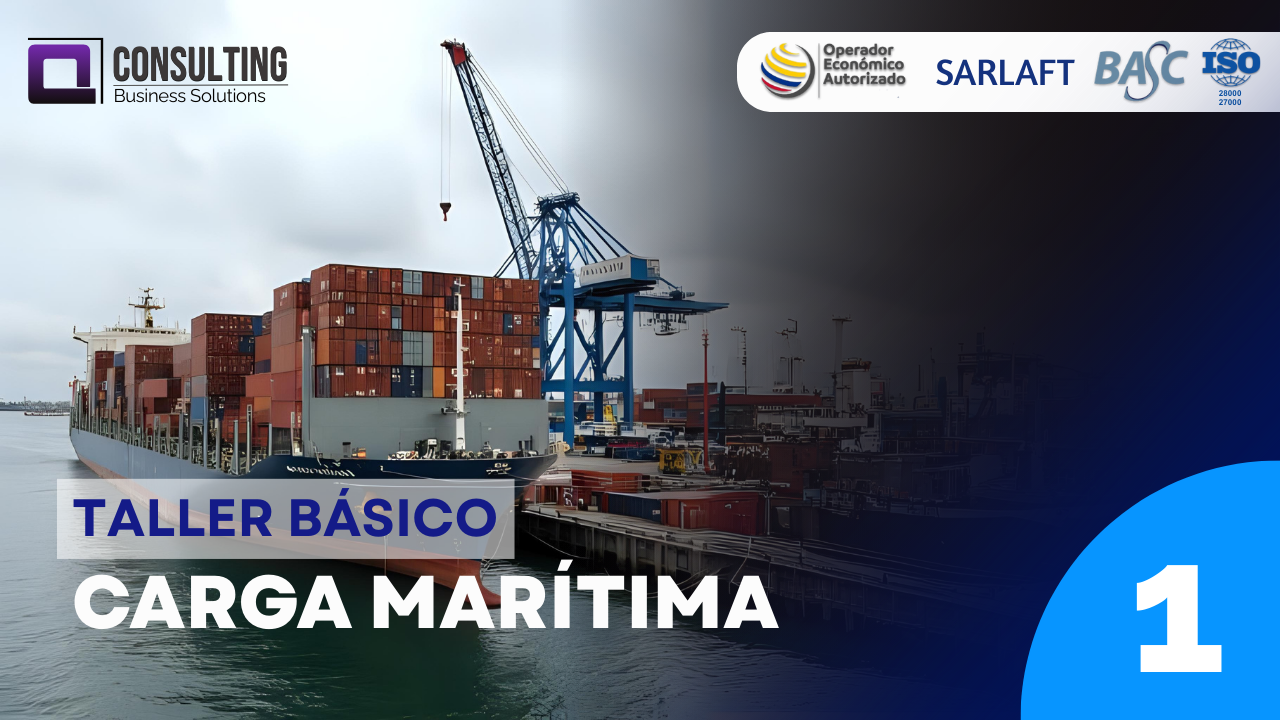
You will learn to apply the principles of maritime cargo transport, the legal framework, terminology, services, documentation, and involved organizations.
The Training Modality is offered according to the needs of your Company or work team

|
Methodology: Virtual Synchronous / Customized Group Mode: Webinar Training / Workshop |
|
Target Audience: |
|
|
Logistics and maritime transport professionals, port operators, freight agents, importers, exporters, and those who wish to expand their knowledge on the subject. |
Objective:
At the end of the training process, participants will be able to recognize the risks for the shipment, receipt, handling, and storage of cargo according to OEA requirements and BASC and ISO 28000 standards, in order to strengthen Attention to Detail, adaptability, flexibility, and teamwork.
After the training:
The participant will be able to understand the legal framework of maritime transport, the involved organizations, port geography, technical terminology, available services, and requirements for the acceptance of goods and shipping documents. This will enable them to effectively manage maritime cargo transport operations to ensure regulatory and operational compliance.
|
Study Plan |
|
|
Content |
Learning Objectives |
|
1. Legal framework. |
|
|
2. Organizations related to maritime cargo transport. |
|
|
3. Geography and ports. |
|
|
4. Terminology. |
|
|
5. Services. |
|
|
6. The main service providers in maritime transport. |
|
|
7. Acceptance of IMO goods. |
|
Courses, Training, Webinars, Forums, Workshops, Audits, Security Visits, in risk management, supply chain security, BASC implementation, ISO, OEA, ConsultingQ, Grupo Imporcenter de Colombia.
- Choosing a selection results in a full page refresh.