


|
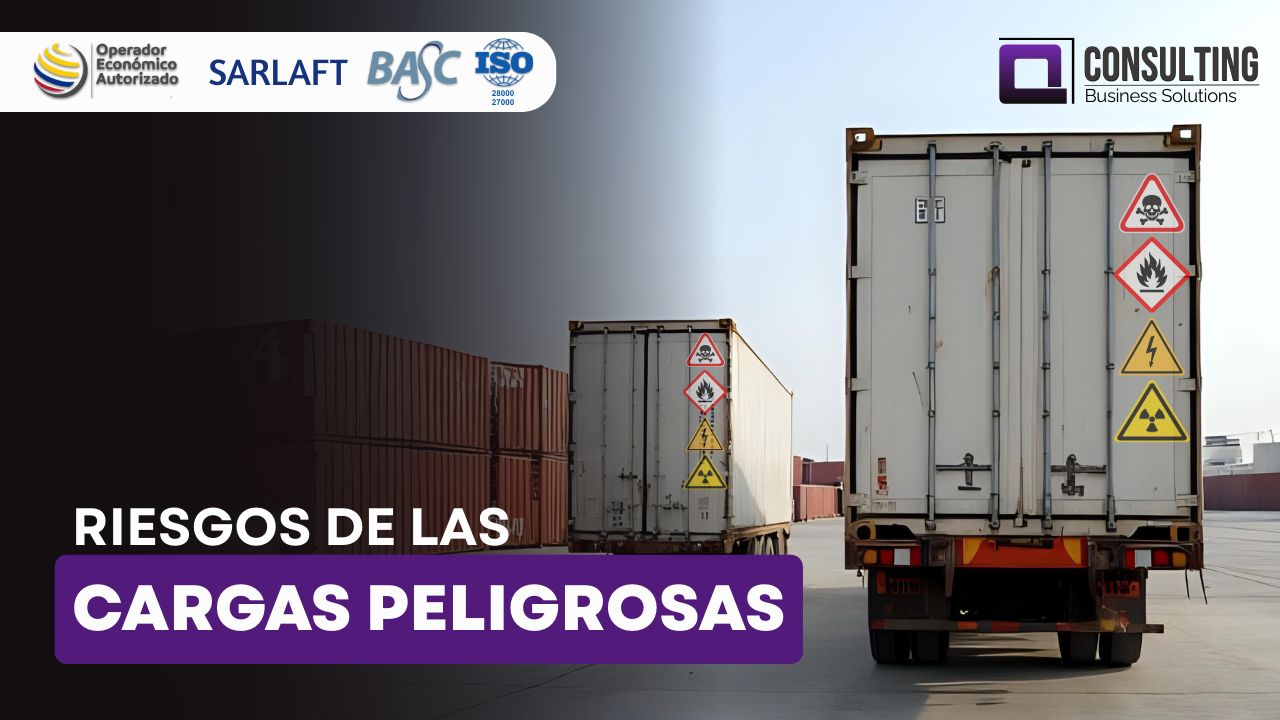
You will learn to recognize the risks involved in the handling and transportation of dangerous goods, according to the regulations of decree 1079 of 2015, decree 1609 of July 2002, and NTC1692, as well as the interpretation of the UN safety diamond and pictograms. The Training Modality is offered according to the needs of your Company or work team |
Methodology: Virtual Synchronous / Customized Group Mode: Webinar Training / Workshop |

| Target Audience: | |
| Supervisors, storage and transportation coordinators, occupational health and safety personnel, vehicle operators, cargo handlers, loading and unloading personnel, and those who wish to expand their knowledge on the subject. |
Objective:
At the end of the training process, participants will be able to recognize the risks in the handling and transportation of dangerous goods, by applying essential criteria according to the regulations of decree 1079 of 2015, decree 1609 of July 2002, and NTC 1692, as well as interpreting the UN safety diamond and pictograms, in order to strengthen attention to detail and the accuracy of information.
After the training:
The participant will be able to manage the risks in the handling and transportation of dangerous goods, clearly identify the requirements of decree 1079 of 2015, decree 1609 of July 2002, NTC 1692, as well as the importance of the UN safety diamond and pictograms.
|
Study Plan |
|
|
Content |
Learning Objectives |
|
1. Types of Temperature-Controlled Cargo: Climate Risks. |
|
|
2. Climate and Non-Climate Cargo: Ethylene Control. |
|
|
3. Temperature Sheet, Traceability, and Evidence: Data Logger. |
|
|
4. Packaging and Risk Management. |
|
|
5. Recommendations before Loading, during Loading, and Transportation. |
|
|
6. Inspection of Refrigerated Vehicles and Containers. |
|
|
7. Characteristics, Preparation, and Set Point of Equipment. |
|
| Study Plan |
| Content |
| 1. What is GHS? It is the Globally Harmonized System for Classification and Labeling of Chemicals (GHS, Globally Harmonized System). |
| 2. GHS Benefits and United Nations Principles: Orange and Purple Books. |
| 3. Safety Data Sheet, Emergency Card for a Chemical Substance, and Required Labels and Documentation for DGM Transportation. |
| 4. Members of the Dangerous Goods Transport Chain. |
| 5. Applicable regulations and standards: Decree 1079 of 2015, Decree 1609 of July 2002, and NTC 1692. |
| 6. UN Safety Diamonds and Pictograms. |
| 7. Training and instruction for drivers by cargo generators. |
| 8. General Requirements for Road Transportation, Safety Kit, valid RC policies, and route design. |
Learning Objectives
- Understand the Globally Harmonized System (GHS) for classification and labeling of chemicals.
- Identify the benefits and principles of GHS according to the United Nations orange and purple books.
- Use and complete the safety data sheet, emergency card, and required labels for the transportation of dangerous goods (DGM):
- Recognize the members of the dangerous goods transport chain and their roles.
- Apply applicable regulations and standards for the handling and transportation of dangerous goods.
- Interpret and use UN safety diamonds and pictograms.
- Implement training and instruction for drivers by cargo generators.
Courses, Training, Webinars, Forums, Workshops, Audits, Safety Visits, Risk Management Consultancies, Supply Chain Security, BASC Implementation, ISO, OEA, ConsultingQ, Importcenter Group of Colombia.
- Choosing a selection results in a full page refresh.